

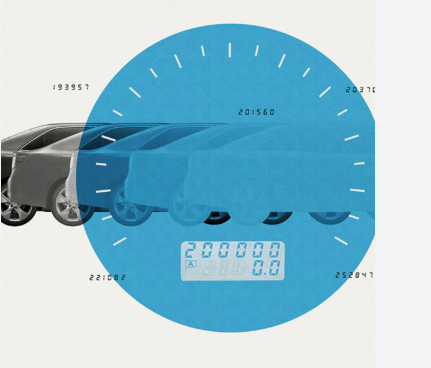
For most households, the car sits quietly in the top three of biggest lifetime expenses — alongside the house and groceries. Between purchase prices, financing costs, insurance, fuel, registration, maintenance, and repairs, the average American household spends tens of thousands of dollars per vehicle over the years they own it. Replace that vehicle two or three times in a lifetime and you’re looking at a six-figure category of spending.
What makes this expense so financially significant isn’t just the dollar amount — it’s how much variation exists between people who manage their vehicles well and those who don’t. The same car, owned by two different people, can cost dramatically different amounts over its lifetime. One owner gets 250,000 reliable miles. The other replaces the car at 130,000 because it became unreliable and expensive. The difference is rarely luck. It’s almost always the result of specific habits and decisions made consistently over years.
This guide covers what those habits and decisions actually are — the practical, evidence-based steps that extend vehicle life, reduce repair frequency, and meaningfully cut what your car costs you over its lifetime. Whether you’re managing a daily-driver sedan, a family SUV, or the work truck you depend on, the principles apply consistently. And finding a quality Auto Repair Shop you can build a long-term relationship with — like Ali’s Woodinville Auto Repair for drivers in the Woodinville and Eastside area — is one of the most consequential decisions in the whole equation.
The Real Math of Car Ownership
Most people focus on the obvious costs of car ownership — the monthly payment, the insurance bill, the fill-ups at the gas station. These are visible, recurring, and easy to track.
What gets less attention is the larger category that’s harder to see month-to-month but enormous over time: depreciation and repair costs that escalate when vehicles aren’t properly maintained.
Depreciation is the loss in vehicle value over time. A new car loses 20 to 30 percent of its value in the first year alone, and another 15 to 20 percent in the second year. By year five, many vehicles have lost half their original value. This depreciation accelerates significantly when a car develops a reputation for needing major repairs — meaning that how well you maintain a vehicle directly affects its resale value years later.
Repair costs follow a predictable pattern across vehicle life. They’re low in the first several years (warranty often covers significant items), rise gradually through the middle years, and accelerate as vehicles age — particularly when minor issues weren’t addressed in time and became major problems.
The owners who keep vehicles longest and spend least per mile of ownership do specific things differently. They follow maintenance schedules. They address small issues before they cascade. They develop relationships with quality repair shops. They make replacement decisions based on actual data rather than emotional impulses to upgrade.
The Maintenance Habits That Actually Extend Vehicle Life
Some maintenance items produce dramatic returns on investment. Others are routine but matter. Knowing the difference helps you prioritize where your attention and dollars go.
Oil Changes — The Single Highest-Impact Maintenance Item
Engine oil performs multiple critical functions — lubrication, heat dissipation, cleaning, and corrosion protection. As oil ages, it loses these properties. Sludge builds up. Wear accelerates. The engine’s lifespan shortens.
Following your manufacturer’s oil change interval is the single highest-return maintenance habit available. Modern synthetic oils have extended intervals significantly compared to older conventional oils — many vehicles now run 7,500 to 10,000 miles between changes — but skipping or stretching changes beyond the recommended interval is a reliable way to shorten engine life.
The cost differential is dramatic. A few oil changes per year cost a few hundred dollars annually. Engine failure or major engine repair costs thousands. The math always favors consistent oil maintenance.
Cooling System Care
Engines run hot. The cooling system manages that heat through coolant circulation, the radiator, the water pump, and various sensors and hoses. When any of these components fail or when coolant becomes contaminated, overheating follows — and overheating can destroy an engine quickly.
Coolant should be replaced according to manufacturer recommendations (typically every 30,000 to 60,000 miles, depending on the vehicle). Hoses and the water pump should be inspected at major services. Any sign of coolant leaks or temperature gauge irregularities deserves immediate attention.
Brake System Attention
Brakes wear continuously and require periodic attention. The cost differential between proactive and reactive brake maintenance is significant.
Caught early, brake service is a moderate routine expense — replacing pads and possibly rotors before the metal-on-metal contact that occurs when pads wear completely through. Ignored too long, the same maintenance becomes far more expensive because rotors get damaged, calipers may need replacement, and other components in the brake system can fail in cascade.
Listen for the early warning signs — squealing during braking, longer stopping distances, the steering wheel pulsating during braking — and address them promptly.
Tire Care
Tires affect fuel economy, handling, safety, and the longevity of suspension components. Regular rotation (typically every 5,000 to 7,500 miles), maintaining proper inflation, and replacing tires before they wear past their safe tread depth are basic responsibilities that significantly affect long-term ownership costs.
Underinflated tires reduce fuel economy by several percentage points and wear unevenly, requiring earlier replacement. Misaligned suspension components wear tires unevenly, sometimes destroying expensive tires within months. Both are addressable with routine attention.
Transmission Service
For vehicles with automatic transmissions, periodic transmission fluid service significantly extends transmission life. Transmissions are among the most expensive single components to repair or replace, and consistent fluid maintenance is one of the most cost-effective ways to avoid that expense.
For manual transmissions, gear oil changes at manufacturer-specified intervals serve similar functions.
Suspension and Steering
These components don’t fail dramatically — they wear gradually, affecting handling, tire wear, and ride quality over time. Worn shocks, struts, ball joints, and tie rod ends should be replaced when they reach the end of their useful life, both for safety and to prevent the cascade effects of worn suspension components on other systems.
The Small-Problem Principle
This is the single most important concept in cost-effective car ownership: small problems become big problems unless addressed.
A slight oil leak today is a major engine repair tomorrow if the leak worsens and oil levels drop unexpectedly. A barely audible noise from the front suspension is a relatively cheap repair if addressed now and a major safety issue if ignored until something fails. A minor electrical issue affecting one accessory can become a complex diagnostic challenge if it spreads to other systems.
The owners who keep cars longest and spend least per mile are the ones who treat small issues as warning signs worth investigating, not minor inconveniences worth ignoring. They develop relationships with shops they trust enough to handle small concerns honestly — without inflating them into bigger jobs to drive revenue.
This is also why the choice of repair shop matters enormously over the lifetime of a vehicle. A quality shop will distinguish between issues that need immediate attention and issues that can be monitored. A lower-quality shop will treat everything as urgent and bill accordingly. Over a decade of ownership, the difference adds up dramatically.
Choosing a Repair Shop That Saves You Money Over Time
The right auto repair shop isn’t just the place you go when something breaks. It’s a long-term financial partner whose decisions directly affect what your car costs you over its lifetime. Getting this choice right is one of the most consequential financial decisions in vehicle ownership.
ASE-Certified Technicians
The National Institute for Automotive Service Excellence (ASE) certifies automotive technicians through standardized testing. ASE certification doesn’t guarantee perfection, but it’s a meaningful baseline. Shops that employ ASE-certified technicians are signaling investment in workforce qualifications.
Diagnostic Honesty
A quality shop accurately diagnoses problems and explains them in language you can follow. They show you the actual issue when possible. They distinguish between what’s urgent and what can wait. They don’t manufacture problems that aren’t actually there.
A shop that consistently finds expensive problems on every visit, particularly on cars that aren’t behaving like they have those problems, is operating on a different business model than one that earns customer loyalty through honesty.
Reasonable Pricing With Clear Estimates
Written estimates before work begins. Clear breakdowns of parts and labor. Communication before performing work beyond what was authorized. These aren’t luxuries — they’re basic standards of professional shops. Practices that don’t operate this way are protecting their flexibility at your expense.
Warranty on Work
Reputable shops warranty their work. Specific durations vary, but the existence of a meaningful warranty signals confidence in the work being performed and accountability for outcomes.
Long-Term Community Presence
Shops that have served their community for years have demonstrated something that newer or transient operations can’t yet prove — that customers keep coming back. In a competitive market, sustained local success usually reflects sustained quality.
For drivers in Woodinville and the broader Eastside, Ali’s Woodinville Auto Repair illustrates exactly this kind of quality operation — experienced technicians, work on all makes and models, transparent communication, and the long-term community presence that signals a shop worth building a relationship with. For drivers anywhere, these same characteristics are what to look for.
The Replacement Decision: When to Keep the Car and When to Move On
There’s a point in every vehicle’s life where the question shifts from “how do I maintain this car” to “is it time to replace it.” Getting this decision right has significant financial implications.
The wrong approach is emotional. People upgrade because they’re tired of their car, because a friend bought something new, because they want the latest features. These reasons are understandable but often produce premature replacement decisions that cost tens of thousands of dollars.
The right approach is analytical. Compare the cost of continuing to maintain the current vehicle to the all-in cost of replacing it. Include:
- Average annual repair costs based on recent years (not single-year extremes)
- Depreciation on a replacement vehicle (typically 15 to 20 percent per year in early years)
- Increased insurance costs for a newer vehicle
- Financing costs if applicable
- Fuel economy differences
The math often favors keeping a well-maintained car longer than people assume. A car costing $3,000 in annual repairs is still substantially cheaper than a $35,000 replacement that loses $5,000 to $7,000 in value during the first year alone, plus higher insurance, plus financing costs.
The exceptions are when major systems fail simultaneously (transmission, engine, frame issues), when safety becomes a concern, or when the vehicle’s reliability has eroded to the point where it can’t be depended on for its intended use. These are legitimate replacement triggers. Wanting a newer car generally isn’t.
Building a Sustainable Ownership Routine
The owners who get the most out of their vehicles follow a consistent pattern. The specific practices are simple; the consistency over years is what produces the results.
A trusted local shop you bring the car to regularly. Not just for emergencies — for routine maintenance, periodic inspections, and small issues as they arise. This relationship is what produces the cost-effective ownership outcomes everyone wants.
A maintenance schedule you actually follow. Either the manufacturer’s recommendations or a slightly more conservative version. Track services performed with dates and mileage so nothing gets missed.
A small reserve for car expenses. Knowing that repairs will come up periodically allows you to address them without financial stress. Setting aside a modest amount monthly into a car maintenance reserve transforms occasional repairs from crises into routine expenses.
Attentive driving habits. Listening to your car, noticing when something feels different, paying attention to dashboard warnings, and addressing small concerns before they become big ones. The driver who knows their vehicle catches problems early.
Honest replacement timing. Knowing when it’s actually time to replace versus when you just want something new. The discipline to keep a well-maintained car for years longer than the typical replacement cycle produces enormous lifetime savings.
This is the kind of practical financial habit that compounds significantly over decades of vehicle ownership. Done consistently, it saves the average household well into five figures over a working lifetime.
FAQs
Q: How often should I take my car to the shop for general checkups?
A: A basic check at every oil change (every 5,000 to 10,000 miles, depending on your vehicle) covers most routine inspections. A more thorough annual inspection is worthwhile for older vehicles. Building a relationship with a trusted shop is more important than rigid intervals — they’ll know your vehicle’s history and recommend appropriate frequency.
Q: Is dealership service worth the higher prices?
A: For warranty work, manufacturer recalls, and certain specialized issues — yes. For routine maintenance and most common repairs, quality independent shops typically provide equivalent or better service at lower prices.
Q: How long should I expect a modern car to last?
A: With proper maintenance, 200,000 to 250,000 miles is realistic for most modern vehicles. Some makes and models routinely exceed 300,000 miles. The variable is maintenance, not the inherent capacity of the vehicle.
Q: When does it make financial sense to replace a car?
A: When the all-in cost of continuing to drive it exceeds the all-in cost of replacement — including depreciation, insurance, and financing on the replacement. Get specific numbers before making the decision. The math frequently favors keeping a maintained car longer than instinct suggests.
Q: How much should I budget annually for car maintenance and repairs?
A: For a vehicle that’s three to seven years old, $1,000 to $2,000 per year is a reasonable budget that covers routine maintenance and occasional repairs. Older vehicles require more — $2,000 to $3,500 annually is realistic for vehicles past seven years old, though heavy variation exists depending on the specific vehicle and how it’s been maintained.
Q: What’s the most cost-effective single change I can make to my car ownership approach?
A: Find a quality repair shop and build a long-term relationship with it. The cumulative effect of consistent honest diagnostics, early problem identification, and quality repairs over years of ownership produces savings that no single technique can match.




 Where to Buy JUUL Pods in Dubai: A Simple Buyer’s Guide